Who Invented the Barcode? History From 1949 to the QR Code
Norman J. Woodland and Bernard Silver invented the barcode: their patent for a code of lines and a bull's-eye was filed in 1949 and granted in 1952. The barcode on products came later: IBM's George Laurer designed the Universal Product Code chosen in 1973, and the first one was scanned in Ohio on June 26, 1974.
By the Barcode.codes editorial teamReviewed
The Barcode Inventors: Woodland and Silver
The two graduate students described the barcode in a single patent, filed on October 20, 1949, and granted on October 7, 1952.
How the Idea Started in 1948
IBM's history says Silver, a graduate student at the Drexel Institute of Technology, took up the problem in 1948 after hearing a supermarket executive ask for a way to encode product data. He asked a fellow student, Joseph Woodland, to help.
Woodland worked on it full time in Miami. Drawing lines in the sand, he saw that wide and narrow lines could stand for data, like the dashes and dots of Morse code.
The 1952 Patent for Lines and a Bull's-Eye
U.S. Patent 2,612,994, "Classifying Apparatus and Method," describes a code of lines read by a light-sensitive scanner. It shows the code as straight lines and as a bull's-eye of concentric circles, which reads the same from any direction.
IBM's history notes that the system needed a 500-watt light and was not practical then, and that Silver and Woodland sold the patent for USD 15,000. By 1970, it says, RCA owned the bull's-eye patent.
U.S. Patent 2,612,994 the full patent of Woodland and Silver, with its drawings, on Google Patents.
When Was the Barcode Invented?
The barcode was invented in 1949, when its patent was filed, but the barcode on products dates from April 1973, when the U.S. grocery industry chose the Universal Product Code.
| Year | What Happened | Source |
|---|---|---|
| 1949 | Woodland and Silver file their patent (October 20) | U.S. Patent 2,612,994 |
| 1952 | The patent is granted (October 7) | U.S. Patent 2,612,994 |
| 1970 | U.S. grocery executives form a committee and ask for a scannable product symbol | IBM |
| 1973 | The Universal Product Code is chosen, from IBM's linear design (April) | IBM, GS1 |
| 1974 | The first U.P.C. is scanned at a store checkout (June 26) | IBM, GS1 |
| 1977 | The European Article Numbering Association (EAN) is founded in Brussels | GS1 |
| 1994 | DENSO WAVE releases the QR Code | DENSO WAVE |
| 2005 | UCC and EAN merge into one organization, GS1 today | GS1 Belgium & Luxembourg |
George Laurer and the Universal Product Code
IBM engineer George Laurer led IBM's answer to the grocery committee. IBM's history says he turned down the bull's-eye, which smeared when printed, and proposed a linear symbol; the Universal Product Code adopted in April 1973 followed his design with small changes.
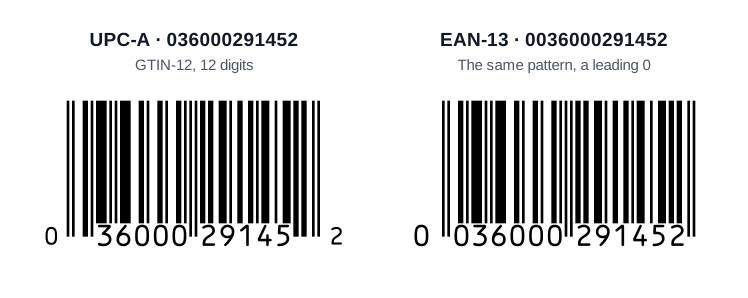
What is a UPC code? the 12 digits of a UPC-A and what each part means.
From UPC to EAN and GS1
In 1977 the European Article Numbering Association was founded in Brussels, and GS1 says its EAN barcode is fully compatible with the U.P.C. In 2005 the U.S. Uniform Code Council and EAN merged into one organization, now GS1.
EAN vs UPC how the two barcodes differ today and how to convert one to the other.
The First Barcode Ever Scanned
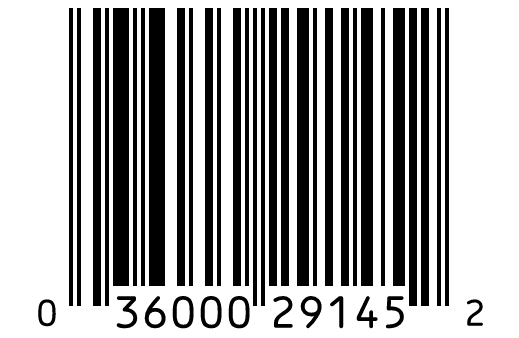
The first U.P.C. barcode scanned at a store checkout was on a 67-cent pack of Wrigley's Juicy Fruit gum, at Marsh's Supermarket in Troy, Ohio, on June 26, 1974.
IBM and GS1 both date the first scan to June 26, 1974, at a Marsh supermarket in Ohio, and IBM names Troy as the town. GS1 calls the gum the first product in the world to be scanned with a barcode.
Why the Store Scan Mattered
IBM's history says grocery staff had applied price tags and keyed in codes by hand, and that the scanned symbol moved products far faster than a person could enter prices into a register. GS1's timeline lists barcodes on wholesale cartons and multipacks from 1983.
How do barcodes work? how a scanner turns the bars back into the product number.
Who Invented the QR Code?
DENSO WAVE, then a division of DENSO Corporation, developed the QR Code and released it in 1994; a team of two led by Masahiro Hara designed it.
DENSO WAVE says the code was made to hold far more than a barcode and was adopted by the auto industry for its electronic kanban. It published the specification and kept the patent rights but declared that it would not exercise them, so anyone can use the QR Code.

What is a QR code? how a QR code stores data and what it can hold.
Frequently Asked Questions
Why Was the First Barcode Round?
A bull's-eye of concentric circles reads the same from any direction, so the package did not have to face the scanner one way. IBM's history says it smeared when printed, which is why the U.P.C. uses straight bars.
Did the Inventors Make Money From the Barcode?
Not much from the patent: IBM's history says Woodland and Silver sold it for USD 15,000. The patent was granted in 1952, long before barcodes appeared on products in 1974.
When Did Barcodes Come to Europe?
The European Article Numbering Association was founded in Brussels in 1977, and its EAN barcode was made compatible with the U.S. U.P.C. EAN-13 is the product barcode most countries outside North America use today.
Are Barcodes Being Replaced by QR Codes?
Not yet at checkouts: GS1's guideline for 2D barcodes at retail asks brands to keep the linear barcode next to a 2D one during the transition. The move is known as Sunrise 2027.
Sources
Every date in this guide comes from these primary sources; where two of them differ, the guide gives the one in the patent or names only the month. Retrieved on the dates shown.
U.S. Patent 2,612,994, Classifying Apparatus and Method, N. J. Woodland and B. Silver the patent itself: filed October 20, 1949, patented October 7, 1952, with the line and concentric circle codes; copy saved October 19, 2026.
IBM: The Universal Product Code IBM's history of the U.P.C.: the 1970 committee, George Laurer's linear design, April 1973 and the first scan in 1974; copy saved October 19, 2026.
GS1: How we got here GS1's timeline from the barcode of April 1973 and the first scan in 1974 to EAN in 1977; copy saved October 19, 2026.
GS1 Belgium & Luxembourg: 50 years of transforming tomorrow a GS1 Member Organisation's timeline, including the merger of UCC and EAN in 2005; copy saved October 19, 2026.
DENSO WAVE: History of QR Code the QR Code's developer on its 1994 release, Masahiro Hara's team and the patent rights it does not exercise; copy saved October 19, 2026.
GS1 2D barcodes at retail point-of-sale implementation guideline, release 1.1.0, December 2025 describes the voluntary transition, keeping the linear barcode, and placement.
Related Barcode Guides
- What is a barcode?
What a barcode holds, its parts and its uses.
- What is a UPC code?
The 12 digits of the barcode first scanned in 1974.
- EAN vs UPC
The European and North American product barcodes compared.
- What is a QR code?
How the QR Code of 1994 stores data.